What are the characteristics of a coil reactor
Information summary:Coil reaction vessels are divided into two categories:
Built in coil (immersion coil inside the kettle)
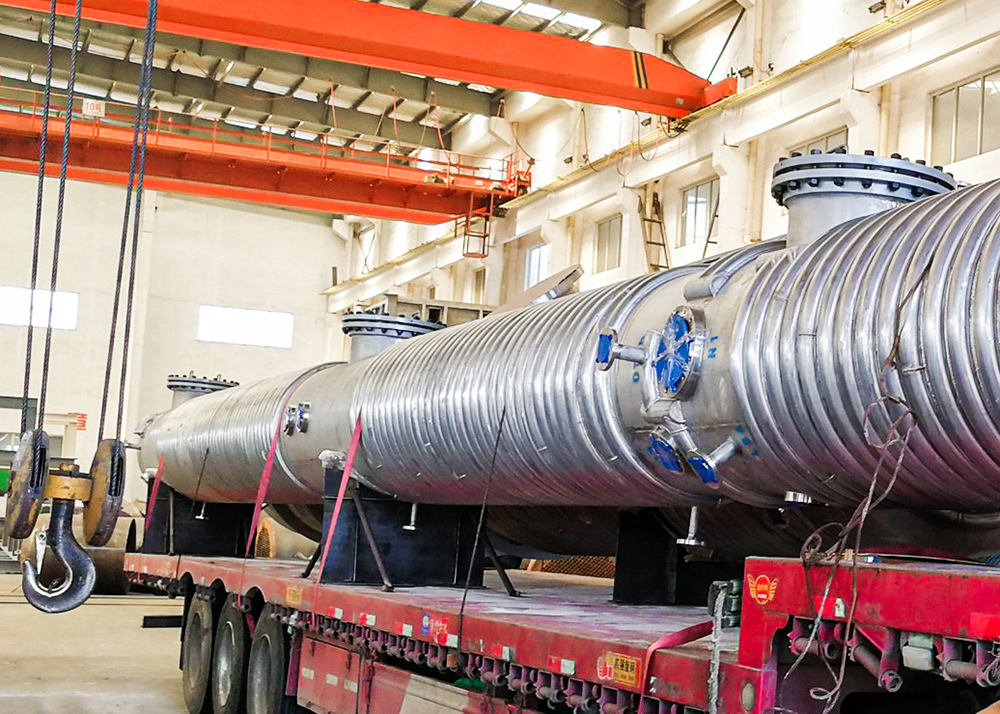
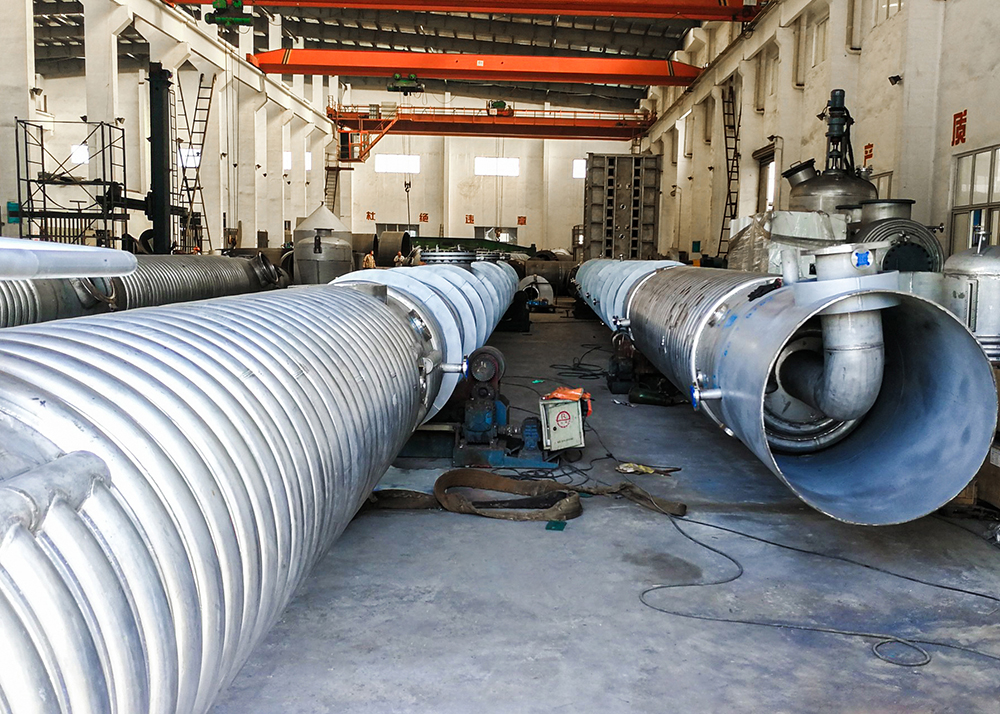
Outer half tube coil (welded semi-circular tube on the outside of the cylinder, commonly known as outer coil)
Core function: Introduce steam, thermal oil, cooling water, and frozen salt water to achieve heating/cooling, replacing traditional jacketed reactors.
Coil reaction vessels are divided into two categories:
Built in coil (immersion coil inside the kettle)
Outer half tube coil (welded semi-circular tube on the outside of the cylinder, commonly known as outer coil)
Core function: Introduce steam, thermal oil, cooling water, and frozen salt water to achieve heating/cooling, replacing traditional jacketed reactors.
Core advantages
1. The heat exchange efficiency is much higher than that of ordinary jacketed reactors
The jacket medium has dead corners and low flow velocity; The fluid inside the coil is forced to turbulent, resulting in a higher heat transfer coefficient;
The heat exchange medium is tightly attached to the kettle wall (outer half tube) or directly immersed in the material (inner coil tube), with fast heat transfer;
The temperature rise and fall speed is faster, suitable for processes that require rapid heating and rapid cooling.
2. Significant advantage in pressure bearing capacity (emphasis)
Ordinary jacket: The jacket cavity area is large, and the jacket design pressure is generally ≤ 0.6~1.0 MPa;
Coiled pipes (especially outer half pipes) have a small cross-sectional area and strong structural rigidity:
The heat exchange medium side can withstand higher pressure and can use high-pressure steam or high-pressure heat transfer oil;
Suitable for high temperature and high pressure heat exchange conditions.
3. Better energy consumption and stronger temperature controllability
The medium circulates in a closed channel of the coil, with adjustable flow rate;
Combined with a circulating hot and cold integrated machine, it is easy to achieve rapid temperature control and segmented temperature control;
The heat loss is less than that of a wide jacket.
4. Suitable for higher temperature operating conditions
A large number of coil structures are used in the high-temperature system of thermal oil (250-320 ℃);
Under high temperature conditions, the jacket is prone to large temperature differences between the inner and outer walls, as well as thermal deformation of the cylinder. The deformation of the coil scheme is smaller.
5. Convenient expansion and renovation
When the heat exchange of the existing reactor jacket is insufficient, a coil can be added internally without replacing the reactor body.








 Service Hotline

 Hotline:0512-52093708
 E-mail:
 Address:No. 101, Taojia Bridge, Dahe Village, Shanghu Town, Changshu City, Suzhou City, Jiangsu Province


 Add wechat
 Contact us
 Telephone